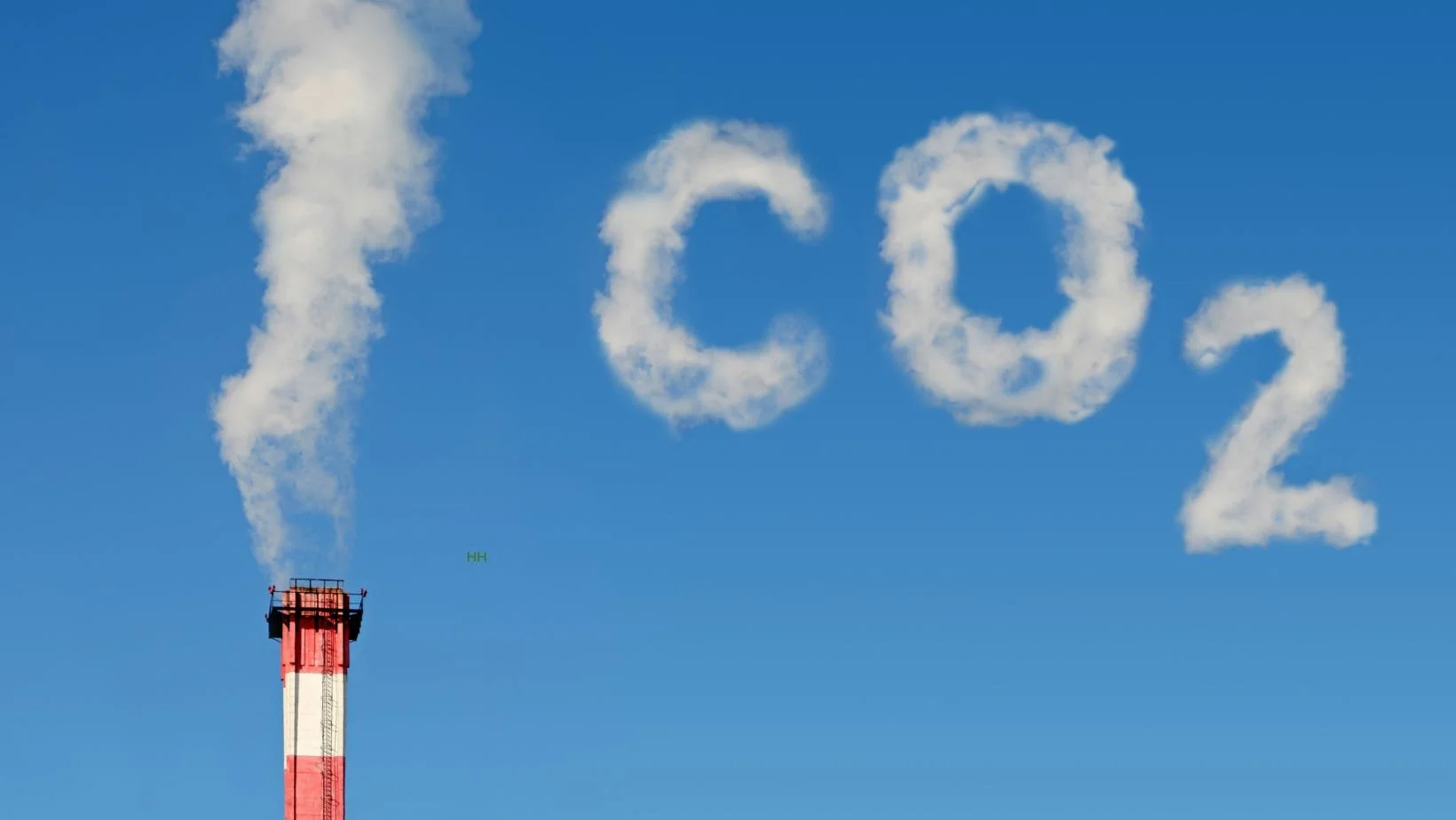
When it comes to climate change, CO2 cannot possibly be the whole story. Here's why
Environmentalists insist that CO2 is THE existential threat and that we must focus solely on CO, to the exclusion (almost) of all other environmental issues. Here's why that doesn't make sense.
One of my objections to an obsessive focus on CO2 is that the people pushing this focus, e.g., the UN and the NYT, seem to assume that solar, wind and EVs will substantially lower carbon emissions. I see almost no reason to believe such claims.
Here’s why.
The economy continues to grow. And it has not been shown to my satisfaction that GDP can be decoupled from energy or that energy can be decoupled from carbon emissions.
To me the only way to lower carbon emissions is to lower total energy consumption. And if energy is—in fact—strongly correlated to GDP, then lowering energy consumption means we have to seriously reorganize our economy. This should be okay, given that most energy consumption goes to activities that most people could do without if they 1) could see the cost and 2) control how their money is spent.
Since when is human well-being a function of how much money changes hands (GDP)? Couldn’t we eliminate most war, pollution and pesticides if We The People were the actual decision makers?
In any event, the question remains: Can emissions be decoupled from energy? And can energy be decoupled from GDP?
Some people point to this or the country that has lowered emissions while growing the economy. But are such countries not outsourcing their emissions? And are they counting the future emissions likely to occur from land degradation, or the sequestration foregone, due to the degradation of ecosystems that nobody is talking about, e.g., pollinator habitat and the deep sea, which will likely be mined for “renewable” energy.
And if energy, emissions and GDP continue to be strongly correlated at the macro (global) level then this seems to undermine the strength of any nation-specific claims to have lowered emissions while growing the economy.
If the above is incorrect, please correct me. But if this analysis has merit, then the whole conversation around CO2 is misleading, unless “renewables” can power the world economy, which I doubt.
The term “renewable” includes biomass energy, which is not renewable.
The UK and the EU claim to have said goodbye to coal. But they are only doing so at the expense of American and Canadian forests, many of them old growth forests.
This article shows the misconceptions buried within the push for “biomass energy.”
Climate scientists warn against burning biomass as clean energy solution
Fun fact: An economy that grows by 2.4% will double every 30 years, along with energy consumption. Imagine everything you see, just twice as much. That’s what we’re doing every generation. And every hundred years, we just add a zero to GDP and energy consumption. In 300 years, multiply everything by a factor of 1000. In 1000 years, multiply everything by a factor of 10 billion.
And what are we doing with this energy? Driving to extinction 150 species per day. If that number is exaggerated by a factor of 10, it’s still serious. We’ve lost 74% of monitored vertebrate populations since 1970, if the WWF is to be believed.
In other words, it’s not how we generate energy, it’s what we do with it that really matters. Small consolation if you cut down a forest with a solar powered chainsaw, or if the heavy equipment chewing up our forests runs on electric motors and biofuels.
Another fun fact: Anthropogenic mass now equals worldwide biomass. In the year 1900, it was 3%. Now it’s 100%. Later in this century, anthropogenic mass will double—and then triple—worldwide biomass. We are inexorably crowding out the natural world.
Note well: The natural world cycles 10 times as much carbon as the human world, but only if we don’t continue to crowd it out. According to Vaclav Smil we have eliminated 50% of the biomass in the last 5000 years. How much trouble would it be to reverse this trend? And if the trend continues, where does it lead?
Our problems are so much more fundamental than CO2.
The conversations around CO2 has become so doctrinaire and monomaniacal that doubters have abundant reason to feel we climate activists are a perfect blend of Chicken Little and the emperor whose clothes were made of invisible thread. “Intelligent” people can see the clothes. Right!
Meanwhile, we are ignoring much more obvious and easily quantified problems of wildlife decline, pollution and toxic foods, brought to you by an exceedingly carbon intensive and energy extravagant food system that continues to degrade our soil, causing erosion and depleting carbon. But nobody want to confront powerful, profitable industries. So we pretend to care by fetishizing solar and wind while vilifying oil and meat.
Our rhetoric and our reasoning needs to come down to earth where most people live and focus on what people can see and feel, including wildlife, clean air, clean water and healthy food. We live in a world made by and for Big Business. If we change that we are getting to the root of the problem. If we don’t, there are not enough solar panels in the world.
Thanks for reading.
Hart.
